Skip to content

The jar wall

Every preserve in the notebook, newest first. Each cell carries the three numbers that decide whether it works: pH, Brix and the temperature the gel forms at.

20 of 30 records published so far, the rest drip out through the autumn.

Set-point strip

104 °C

Drag along the scale. Only the preserves whose gel point falls inside the window stay on the wall — nothing is hidden from the page itself, just filtered out of view. The far right also pulls in the pastes, which set above 105 °C.

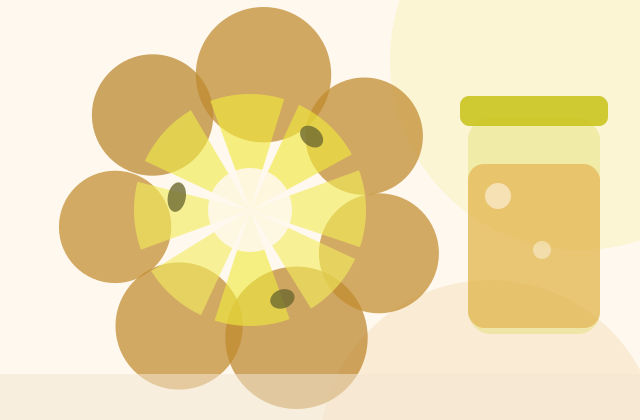
Flat cross-section illustration of Raspberry beside a jar: Seedless Raspberry Jam with a Fresh, Uncooked Edge
Berries

Seedless Raspberry Jam with a Fresh, Uncooked Edge

Raspberry has a delicate aroma that survives about eight minutes of boiling and then simply is not there any more. This recipe keeps the set honest with added pectin and a short boil, then folds in a small amount of uncooked fruit at the end — enough to bring back the top note without putting raw fruit in the jar.

  • 104 °C set
  • 64 Brix
  • pH 3.3
  • 12 months
Published 14 Oct 2026
Flat cross-section illustration of Plum beside a jar: Plum Jam with Cardamom and a Firm Set
Stone fruit

Plum Jam with Cardamom and a Firm Set

Plums have plenty of pectin but it hides in the skin, and plum skin is also where the tartness lives. The result is that plum jam made from peeled fruit is both sweet and loose, while the same fruit cooked skin-on sets firmly and tastes of something. Keep the skins, keep the acid, and let cardamom bridge the two.

  • 105 °C set
  • 65 Brix
  • pH 3.2
  • 24 months
Published 11 Oct 2026
Flat cross-section illustration of Bergamot beside a jar: Bergamot Marmalade: Taming a Fruit That Is Mostly Aroma
Citrus

Bergamot Marmalade: Taming a Fruit That Is Mostly Aroma

Bergamot is bitter enough to strip paint and perfumed enough to scent a room, which makes it the most unbalanced marmalade fruit there is. The fix is arithmetic rather than technique: cut the bergamot with a bland high-pectin fruit and let the aromatic peel speak at a lower concentration.

  • 104 °C set
  • 65 Brix
  • pH 3.1
  • 18 months
Published 8 Oct 2026
Flat cross-section illustration of Cantaloupe beside a jar: Cantaloupe Jam, Acidity Corrected from pH 6.0
Melons

Cantaloupe Jam, Acidity Corrected from pH 6.0

A ripe cantaloupe sits at pH 5.9 to 6.2, which is above the line where a boiling water bath can be trusted. Every melon recipe in this collection acidifies first and cooks second, and this one uses a measured 15 percent lemon juice by weight of fruit — not for flavour, for safety.

  • 105 °C set
  • 66 Brix
  • pH 3.4
  • 12 months
Published 5 Oct 2026
Flat cross-section illustration of Guava beside a jar: Guava Paste That Slices, Not Guava Jam That Runs
Tropical

Guava Paste That Slices, Not Guava Jam That Runs

Guava has more pectin than any other tropical fruit — enough that a kilo of ripe fruit will thicken to a sliceable block with nothing added. That is not jam; it is pasta de guayaba, eaten in slabs with cheese. The only real decision is how far to reduce it, and that is a number: 78 Brix.

  • 108 °C set
  • 78 Brix
  • pH 3.4
  • 24 months
Published 2 Oct 2026
Flat cross-section illustration of Blueberry beside a jar: Blueberry and Lime Jam: Fixing a Fruit That Has No Acid
Berries

Blueberry and Lime Jam: Fixing a Fruit That Has No Acid

Blueberries read as tart, but that is tannin in the skin, not acid: the flesh sits at pH 3.8 to 4.2, high enough that a plain blueberry jam sets weakly and tastes flat. Lime juice and lime zest pull the pH down to 3.2 and give the fruit the backbone it lacks on its own.

  • 105 °C set
  • 65 Brix
  • pH 3.2
  • 18 months
Published 29 Sep 2026
Flat cross-section illustration of Kumquat beside a jar: Whole Kumquat Preserve with a Syrup That Stays Liquid
Citrus

Whole Kumquat Preserve with a Syrup That Stays Liquid

A kumquat is the only citrus you eat skin and all, so the preserve is judged on the texture of the rind, not the gel. Cook it too fast and you get leathery coins in a syrup so thick it will not pour; cook it in three short passes and you get translucent fruit suspended in a syrup that still runs off a spoon.

  • 103 °C set
  • 62 Brix
  • pH 3.4
  • 12 months
Published 26 Sep 2026
Flat cross-section illustration of White peach beside a jar: White Peach Jam: Blanch, Peel, and Work Fast
Stone fruit

White Peach Jam: Blanch, Peel, and Work Fast

A white peach has roughly half the acid of a yellow one and a fragrance that lives entirely in the skin — which is also the part you have to remove, because peach skin turns into a bitter, papery strip in the jar. The answer is a ten-second blanch: the skin slips off with the aroma still on the fruit.

  • 105 °C set
  • 64 Brix
  • pH 3.5
  • 12 months
Published 23 Sep 2026
Flat cross-section illustration of Musk melon beside a jar: Musk Melon Jam with Ginger and a Measured Acid Load
Melons

Musk Melon Jam with Ginger and a Measured Acid Load

Musk melon is the most aromatic melon and the one that loses the most in cooking, so this recipe pushes the aroma in two directions: fresh ginger for heat and a small amount of the fruit held raw and folded in at the end. The acid load is measured by weight, because pH 5.8 will not support a water bath on its own.

  • 105 °C set
  • 66 Brix
  • pH 3.3
  • 12 months
Published 21 Sep 2026
Flat cross-section illustration of Blackberry beside a jar: Blackberry Jam: Dealing with a Fruit Full of Hard Seeds
Berries

Blackberry Jam: Dealing with a Fruit Full of Hard Seeds

Blackberries carry medium pectin and good acid, so they set easily — the problem is the seeds. Every blackberry has 20 to 40 of them, they are hard enough to crack a tooth, and because they are attached to the core they survive even a long cook. This recipe separates the fruit from the seed before the sugar goes in.

  • 105 °C set
  • 65 Brix
  • pH 3.2
  • 18 months
Published 17 Sep 2026
Flat cross-section illustration of Honeydew beside a jar: Honeydew and Mint Jelly, Clear Enough to See Through
Melons

Honeydew and Mint Jelly, Clear Enough to See Through

Honeydew has one thing going for it: a clean, pale flesh that makes a jelly which is almost colourless, and almost colourless is the perfect canvas for mint. Everything else about it is a problem — pH 6.3, water everywhere, and a flavour that boils off in minutes.

  • 105 °C set
  • 65 Brix
  • pH 3.3
  • 12 months
Published 12 Sep 2026
Flat cross-section illustration of Pineapple beside a jar: Pineapple Jam: Stop the Bromelain Before It Stops You
Tropical

Pineapple Jam: Stop the Bromelain Before It Stops You

Fresh pineapple contains bromelain, a protein-cutting enzyme that will digest the pectin you add and leave you with a jar of sweet pulp. The enzyme is destroyed by heat, so the fix is simple: cook the fruit for five minutes before the pectin goes anywhere near it.

  • 105 °C set
  • 66 Brix
  • pH 3.5
  • 18 months
Published 8 Sep 2026
Flat cross-section illustration of Sour cherry beside a jar: Sour Cherry Preserve with the Pits Left In
Stone fruit

Sour Cherry Preserve with the Pits Left In

Sour cherries carry almond aroma in their pits and pectin in their skins, and both are lost the moment you pit them. Leaving the pits in means a batch that perfumes the kitchen and sets without help — the only cost is 20 minutes of work warning everyone at the table.

  • 104 °C set
  • 66 Brix
  • pH 3
  • 24 months
Published 5 Sep 2026
Flat cross-section illustration of Redcurrant beside a jar: Redcurrant Jelly: The Benchmark Set Every Jam Maker Needs
Berries

Redcurrant Jelly: The Benchmark Set Every Jam Maker Needs

Redcurrants are the most reliable jelly fruit that grows in a temperate garden: pectin so abundant that a litre of juice gels with nothing added, and enough acid to set at a pH where no mould can grow. Make this once and you have a reference for what a proper set feels like.

  • 104 °C set
  • 65 Brix
  • pH 2.9
  • 24 months
Published 1 Sep 2026
Flat cross-section illustration of Yuzu beside a jar: Clear Yuzu Jelly: Straining for a Jelly That Stays Transparent
Citrus

Clear Yuzu Jelly: Straining for a Jelly That Stays Transparent

Yuzu skins carry roughly twice the aromatic oil of a lemon and its pips are a first-class pectin source, which makes it the best citrus for a crystal-clear jelly. The catch is that any pressure on the pulp clouds the batch permanently — clarity in jelly is decided while the juice is still dripping.

  • 104 °C set
  • 65 Brix
  • pH 2.9
  • 18 months
Published 29 Aug 2026
Flat cross-section illustration of Watermelon rind beside a jar: Watermelon Rind Preserve: The Part Everyone Throws Away
Melons

Watermelon Rind Preserve: The Part Everyone Throws Away

The white layer under a watermelon rind is the only part of the fruit with real pectin, and it is also the only part that is not 92 percent water. Cut it into strips, lime it overnight and cook it in a spiced syrup and you get something closer to a candied citrus peel than to a jam — firm, translucent and unmistakably worth making.

  • 104 °C set
  • 68 Brix
  • pH 3.1
  • 18 months
Published 26 Aug 2026
Flat cross-section illustration of Mango and passionfruit beside a jar: Mango and Passionfruit Jam: Acid from the Passionfruit, Body from the Mango
Tropical

Mango and Passionfruit Jam: Acid from the Passionfruit, Body from the Mango

Ripe mango sits at pH 3.9 to 4.2, which is too high for a reliable set and, more seriously, too high for safe water-bath canning without added acid. Passionfruit fixes both: it lands at pH 2.9 and brings the seeds that make this jam instantly recognisable on the shelf.

  • 105 °C set
  • 65 Brix
  • pH 3.1
  • 18 months
Published 23 Aug 2026
Flat cross-section illustration of Apricot beside a jar: Apricot Jam: Crack the Stones for the Best Part
Stone fruit

Apricot Jam: Crack the Stones for the Best Part

The kernels inside apricot stones carry benzaldehyde, the same aromatic that makes bitter almond, and ten of them will perfume a whole batch for the cost of a minute with a hammer. Without them apricot jam is pleasant; with them it tastes like the apricots you remember from a holiday.

  • 105 °C set
  • 65 Brix
  • pH 3.3
  • 18 months
Published 20 Aug 2026
Flat cross-section illustration of Strawberry beside a jar: Strawberry Preserve with the Fruit Still in Pieces
Berries

Strawberry Preserve with the Fruit Still in Pieces

Strawberries are the worst jam fruit in the book: low pectin, high water, and pigments that collapse into brown sludge if you boil them hard. Everything about a good strawberry preserve is about removing water before the fruit breaks down, which is why this recipe macerates overnight and boils in two short hits.

  • 104 °C set
  • 64 Brix
  • pH 3.4
  • 12 months
Published 17 Aug 2026
Flat cross-section illustration of Seville orange beside a jar: Seville Orange Marmalade That Sets at 104 °C
Citrus

Seville Orange Marmalade That Sets at 104 °C

Seville oranges arrive for six weeks in January and carry enough pectin in their pith and pips that a marmalade needs no added gelling agent at all. The only thing that goes wrong is bitterness, and bitterness is a soaking problem, not a sugar problem.

  • 104 °C set
  • 66 Brix
  • pH 3
  • 24 months
Published 14 Aug 2026

How to read the numbers

Three numbers decide whether a batch sets, and they are not independent. Brix is the percentage of sugar in the finished preserve: a pectin gel needs roughly 65 Brix to hold its shape at room temperature, because below about 62 it stays soft enough to weep and above 68 it turns tough and starts to grain.

pH decides whether the pectin can build a network at all. High-methoxyl pectin will not gel above pH 3.5, which is why the low-acid melons and the banana in this notebook have acid added deliberately. Below pH 2.8 the gel squeezes water back out and you find syrup at the bottom of the jar. Most of the recipes here aim between 2.8 and 3.4.

The gel point is the number you read off the thermometer while cooking: a syrup at 65 Brix and pH 3.2 begins to set between 104 and 105 °C. The thermometer is only one reading, though — checking the finished Brix with a refractometer before you pot is more reliable, because how fast the water leaves depends on the width of the pan and the heat under it.

Each cell carries its pectin source, sugar ratio, sealing method and shelf life. The detail page ends with a failure diagnosis listing the four things that go wrong with that particular preserve most often.